
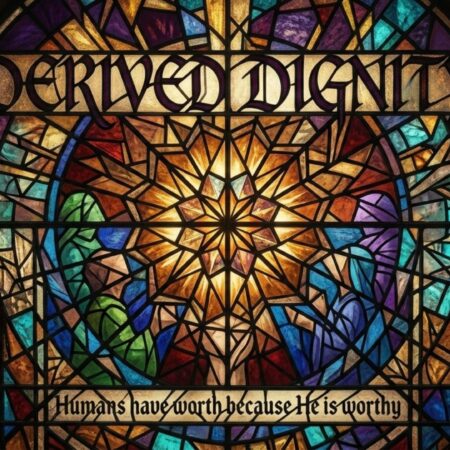
In this message, Pastor Matt explains why human life has worth and value: because we are given worth and value by the one true God who is wholly worthy.
Introduction & The Infinite Worth of God
It is good to be back home. Last week I was preaching in Exeter, Ontario, where I went to high school. And people who knew me when I was in high school are less accustomed to listening to me when I’m here. So thankfully, you guys don’t have that knowledge.
What is the worth of God? Now, God is the subject of the first sentence of the Bible: “In the beginning, God created the heavens and the earth.” God does everything he does for his own glory. Isaiah 48:11 says, “For my own sake, for my own sake I do it. How should my name be profaned? My glory I will not give to another.” God owns the cattle on a thousand hills. Daniel 4:34-35 says, “His dominion is an everlasting dominion, and his kingdom endures from generation to generation. All the inhabitants of the earth are accounted as nothing. And he does according to his will among the hosts of heaven and among the inhabitants of the earth. None can stay his hand or say to him, ‘What have you done?'” God in his creative power and might is glorious and omnipotent. His worth has no end; no one could count it. Were the universe and all creation on a scale, it would fall like a feather into the air compared to the weight of God’s glory. And there’s even more, because God is even greater than his greatness. For he is strength, even made perfect in weakness.
The Gospel and Christ’s Sacrifice
While the glories of the everlasting God are amazing, that glory is even in the child of Bethlehem, even in the prophet of Nazareth, even in the king dying on a cross. That God, Jesus Christ, on that Friday 2,000 years ago, hung like a piece of meat on a cross—suffering not for his own sins, but for yours. He suffered because of his great love, showing that he laid down his life and said, “It is finished.” He gained the freedom of his people from sin, death, and an eternity in hell.
So that any who simply believe in his name, who simply call on the name of Jesus Christ, are not just let in, but welcomed in as a father running to a child, killing the fatted calf, and throwing a party. This is the infinite worth of God—the God who not only lets you in but says, “Come.”
Revelation 22:17 says, “The Spirit and the Bride say, ‘Come.’ And let the one who hears say, ‘Come.’ And let the one who is thirsty come; let the one who desires take the water of life without price.” What is God worth? God is worth everything times everything. God has the infinite power to create and the infinite power to forgive your sin, so that all who come will never be cast out. Oh, what a savior. He’s worth everything to believe in. What a God above all things in every way.
The Worth of Mankind and Total Depravity
Now, in thinking of the worth of God, we want to get to another question, and that is: what is the worth of man? What is the worth of humankind? On one sense, we’ve already said all the inhabitants of the earth are accounted as nothing.
I don’t know if you’ve met people lately, but people aren’t always great. Sometimes they’re good, but have you ever seen people in a riot? Like whenever the Vancouver Canucks do anything, all of a sudden people are smashing into family businesses and looting stores. What have people done? They have murdered, stolen, raped, and abused—not only enemies but their own children. They have engineered genocide, killed people for the color of their skin, and indiscriminately dropped bombs on cities where women and children live. Yes, as believers, we know the total depravity of mankind.
The Image of God (Imago Dei)
And yet, even in thinking of the worst of human atrocities, God’s word will not let us write off the value of every single person, no matter how small, no matter how great. Because our worth and value does not come from what we do. It does not come from how we assess ourselves or each other. Our worth and value is rooted in and defined by God and his infinite value.
“So God created man in his own image. In the image of God he created him; male and female he created them.” This is one of the most foundational truths about human life: every human, no matter how put together, no matter how in the gutter, is made in God’s very own image. God said, “Let us make man in our image, after our likeness.” Theologians have wrestled with this question: What is the image of God in people? You could define it in a lot of ways. Some say the image is our rational capacities—our ways that we can think. Some say it has to do with our relational abilities (that like God is triune, we relate with each other) and others point to our role in having dominion over creation. All of these have merit in the text, but I think beyond just what the image of God says about what we do, we first have to see what being made in the image of God means when we are abstracted from anything that we do.
Assaults on Human Dignity are Assaults on God
An image is most often used as a representative figure, like a statue. My dad visited China, and there are big statues of Chairman Mao scattered about. He went to where the Uyghurs live, and they had armed guards outside the big statue. You know why they had armed guards outside the statue? Because people would probably go and paint a mustache on it or deface it. They would deface it not because they’re mad at the statue—statues don’t have feelings—but because they were mad at the Communist Party of China and wanted some reckoning.
When you see that people are made in the image of God, it means that every assault on the dignity and life of a human person is an assault on God himself. This is why Satan, the devil—who John 8:44 says was a murderer from the beginning—loves death and murder. It’s because he hates God, and he can’t kill God. It’s impossible to do; he tried that once, and it didn’t work. He can’t kill God, but what he can do is attack people.
We don’t always realize it, but the impulse to destroy people is an impulse to diminish, demean, and despise God. Murder is explicitly connected with this in Genesis 9:6: “Whoever sheds the blood of man, by man shall his blood be shed, for God made man in his own image.” The penalty is so serious because the crime is so high. It is an attack on God.
Dignity Through the Incarnation
Human life is not just valuable by what it does or what it thinks about itself. Its value is rooted in the infinite value of God. The dignity of every person is derived from the infinite value of God.
This value of human life has its fullest vision in Jesus Christ himself, who is fully God and fully man in every way. He is the image of the invisible God (Colossians 1:15). He had to be made like his brothers in every respect (Hebrews 2:17). Jesus Christ dignifies the value of man because God became man in a way that God could not become a donkey—because man is made in the image of God, and donkeys, not so much. Human life has extraordinary value because it was created in the image of God and dignified in the incarnation of Christ.
Every person that you have ever met—from the most put-together, rich celebrity to the lady who sits in a wheelchair and begs outside of the Superstore—was made in that same image. The way you treat her reflects not just on her, but on what you think about God.
Biblical Worth vs. Worldly Ideologies
Most people, regardless of their political commitments or non-Christian beliefs, can get on board with the fact that people have value. After all, people generally like their own lives and their own value. But as soon as you start talking about more controversial issues—e.g., euthanasia, abortion, or what it means to wage a just war—you will find out that their actual view of human life is not driven by an intrinsic value rooted in the dignity of God, but that human beings only have value in what they do or what they believe themselves to be.
I want to set up for you these two competing ideas:
- A biblical view of the worth and value of every human being, rooted in God’s word and God’s image.
- A false, worldly view that says human beings are only valuable for what they can do or what they decide about themselves.
These two false worldly ideologies are rooted in utilitarianism and self-determination.
1. Utilitarianism
Utilitarianism is the doctrine that human life has value in what it does, not simply what it is. We often fall into this just in casual conversations. What’s the first thing that you ask someone when you meet them? “What do you do?” This immediately frames their value around what they do or what they produce, instead of recognizing first and foremost that they are created in the image of God and worthy of respect regardless of what they do or have done.
2. Self-Determination (Autonomy)
Self-determination as a value comes from postmodernism, which rejects any grand ideas about who people are. It says you can’t trust the Bible, you can’t trust the experts, and you can’t trust anybody. So if you can’t trust anybody, who’s the one person you can trust? Yourself. (Though a lot of people should not trust themselves so much!)
This ideology says there is no God to tell me what my life means; my only option is listening to myself. Self-determination and autonomy are really at the root of a lot of modern medical ethics and ethics in general, and it’s something that needs to be untangled and thought about carefully by believers.
The Core Temptation: Trying to be Gods
God says who we are, but the devil will come and whisper in your ear as he did to Eve: “For God knows that when you eat of it your eyes will be open, and you will be like God.” That temptation to make ourselves God and to be the master of our own destiny is a temptation that always haunts us. Every bit of progress and money allows us to insulate ourselves from the world and define our lives more by ourselves and less by what is given to us.
The temptation to be a god was a temptation for human beings from the beginning. We cannot be gods, and the quest to be a god apart from God only makes devils in the end. Before we do anything, no matter what we believe about ourselves, every human life is valuable because it is created in God’s image.
Resting in Our God-Given Identity
This truth is key to both how we think about ourselves and how we think about other people. When we know we are made in the image of God, that is a truth we can rest in. You can wake up in the morning before doing a single thing, before checking anything off your to-do list (except for waking up—I love that one freebie pro-tip: 100% success rate at one minute after waking up). But before you do anything, you can know you’re a child of God because God created you.
On the other side, the utilitarian worldview means that you have to do something before you are something. But in God, we are always something before we do anything. We are made in the image of God, and doubly so in Jesus Christ. Jesus Christ has saved his people not because of works done in righteousness, not because anything they have done has qualified them to be partakers of his grace, but because of his mercy alone. He took you just as you are, having done nothing, and brought you into his kingdom. And so, with doing no good works, you can rest in the fact that you are a child of God, saved by God, destined to rule with Jesus Christ forever in his kingdom.
Under self-determination, only you can say what the good life is. It sounds good until you realize the fact that you could wake up tomorrow and decide that life wasn’t worth anything—and in fact, many people often do, which is a frightening decision made in Canada every day. But when God defines your life, you see that you are born with value, and in Christ, you have a purpose day by day to glorify God and enjoy him forever.
Loving Inconvenient Neighbors
The most important command is to love the Lord your God with all your heart, soul, mind, and strength. The second is to love your neighbor as yourself. When you see that every person is made in the image of God, these two commands become very close together because how you treat people ultimately reflects what you think about God.
- This matters every time we pass the beggar in the Superstore parking lot and our hearts want to turn the other way.
- This matters when we interact with a server who’s done a bad job, yet still needs to be treated as someone made in the image of God.
- This matters when someone drives like a maniac on Highway 10.
- This matters when we have a very real life that is oh-so-inconvenient growing in the womb. Is this child valuable because it has done anything? The utilitarian says if it can’t do anything, it’s not really human. Self-determination says only you can decide what life is. But God says, “This child is made in my image, loved by me, and you show love for me by loving this child.” * This matters when we approach our last days and we are offered a quicker end. The utilitarian says, “You’ve got nothing more to do in life.” Self-determination says it’s your life to decide. God says, “I am the owner of your life. I give it and I take it. And your life has value beyond what you can say or do because you are my image-bearer laid out on the world to display my glory. Don’t deface my image.” This matters in every decision we make. Our lives are not our own; our bodies are not our own. Understanding human value, worth, and dignity is going to be even more crucial as science progresses and we have new opportunities for sin. I just can’t wait until they let you upload your consciousness to the cloud to escape death—not taking it, don’t do it. What it means to be human is defined by God. God created us male and female in his own image, and to be made in the image of God includes how we care about our physical bodies. You cannot merely do what you will with your body because it is a body that images God, and to maim or destroy it in a variety of ways is an assault on God himself.
Looking Ahead: Upcoming Series on Cultural Issues
Summary: Human life has value because it is created in the image of God. It is dignified in the incarnation of Jesus Christ. And so our value, and any human’s value, is rooted in God. Therefore, it is worthy of dignity, respect, and protection. It is rooted in God, not in our self-determination, and not in what we do.
Human dignity is derived from God’s divinity. Humans have worth because he is infinitely worthy. This next month, we are going to apply this singular truth to three areas that are controversial. Buckle up, it’s June. But loving God and neighbor in controversy is what June is about.
- Next week, we are going to talk about abortion and designer babies (we receive children, we don’t just conceive children).
- In two weeks, we are going to talk about medical assistance in dying in the light of the crucifixion.
- In three weeks, we are going to be talking about our responsibility to die well—the shadow of death in the shadow of the cross.
Loving Our Enemies & Conclusion
Before we get into these kinds of big issues that are often politically tinged—and I run away from politics like I run away from bears, carefully keeping my eye on them—we need to see how unbiblical views about humanity (self-determination and utilitarianism) actually play out in our own lives. Because when we talk about these issues, it immediately goes to a political realm when actually it should go very close to us.
One of the biggest criticisms I get talking about these things is: “Sure, pastor, you care about the unborn. Sure, you care about the elderly, but what about everyone else?” This should not happen. We should love all of the inconvenient people of this world—their race, their creed, their own sexual self-definition. We are called to show love and compassion. We’re called to treat them not how they define themselves, but as people made in the image of God. Our hearts, thoughts, and actions towards them should not be based upon what they do, say, or advocate, but upon the infinite glory and worth of God himself.
1 John 4:20 reminds us, “If anyone says, ‘I love God,’ but hates his brother, he is a liar. For he who does not love his brother whom he has seen cannot love God whom he has not seen.” Now, John specifically is talking here about how we treat people in the church, which is of supreme importance. But the principle can be more widely applied since we are called by Christ even to love our enemies. Loving our enemies is the ultimate anti-utilitarianism. People could be out there seeking our harm and destruction, and our response in Christ is not just to hit back because they did it first. That is the attitude that happens so often, and it’s tragic in the church and Christian circles. But our attitude should not be based upon them; it should be based upon God. Jesus Christ calls us to love our enemies because even our enemies are made in the image of God and worthy of respect.
I don’t mind controversy, and I think that as a church, we need to be courageous in speaking the truth in love. Don’t see this as backing down from any truth. But we need to first contemplate the fact that even how we argue, and even how we advocate, must be defined by the worth and dignity of every single person in this world, regardless of what flag they’re waving.
Human life is valuable because it is rooted in the infinite value of God. And so it must be protected; it must be loved, regardless of whether they are friend or foe, young or old. Because human beings are so valuable, they must be pointed to the value giver—truth and grace in our Lord Jesus Christ, who himself is the infinite value of God cloaked in the flesh made in that image.
So church, today let us go and let us love. Let us love God, and let us love people—not because of what they do or think or how they treat us, but because they’re made in the image of Almighty God, and for that reason, deserving of respect.
Closing Prayer
Let us pray.
Our infinite, almighty, everlasting God, I pray today that you would give us by your Spirit a heart and vision of your immense worth, beauty, and power. May we love your law, love what you say, and love your commands. And in loving you, when our eyes turn downward to our fellow human beings—from those closest to us to those who are opposed to us—may we love them not just for what they are, but because of whose image they are made in. May you grant us this love, and may we live it in Jesus’ name.
Amen.